Wednesday, May 14, 2014

The 7 Essential Business Insurance Policies:


Liability insurance protects your business
from third-party lawsuits
There are so many commercial insurance coverage options out there, it can feel confusing or overwhelming trying to sift through them to determine which are necessary for protecting your business. To help you, we’ve made a list of the seven insurance policies that every business owner should have, regardless of business type or size (and we’ve even outlines some additional coverage options that are smart add-ons, or even essentials, depending on the type of business you own).

Protecting your investment is one of the most important strategies for your success. Managing your risk is the best way to ensure that the inevitable mistakes that occur along the normal lines of doing business (schedule or shipment delays, accidents and injuries, damage to inventory) don’t compromise your business or your profits. The right insurance policies help safeguard your profits and your possessions.

If you’re just starting out, these business insurance basics are essential to your future success. If you own an existing business, you should already have these coverages to protect the profitability of the business you’re working so hard for.

Seven business insurance policies that you shouldn’t do without:
  1. General Liability Insurance – This covers damage to persons or property caused by a business's product or premises (sometimes referred to as “slip and fall” insurance). Maybe the most important coverage you can get in our litigation-looped society, this can protect you against a wide range of lawsuits, from the postal worker who slips and falls in your parking lot to the consumer injured by your product. You need this type of coverage before you ever sell a single product or service. There are several different types of liability options that can be included in your policy depending on your business type, including general liability, product liability, liquor liability, advertising liability, on and off premises liability, and many others. Product liability, for instance, protects you if your business makes a product that could conceivably harm someone else. (Food and beverage related businesses that produce a consumable product need this type of coverage.
  2. Commercial Property Insurance – Property insurance covers damage to your building and the items within it, including inventory, loss of income, and furniture/electronics. It
    Commercial Property Insurance protects
    your premises and the items inside it 
    also covers any improvements or customizations that you make as a tenant, if you rent your space.
  3. Commercial Auto Insurance – This will cover collision and liability for the vehicles that are owned by you, your employees, and rented vehicles.
  4. Workers Compensation – Bodily injury to yourself or your employees.  Whether you have one employee or a hundred, you need Workers Comp included in your policy. Workers Comp is a state required benefit that will help take care of medical become ill while working at your brewery. 
  5. Excess Liability/Umbrella Insurance – An umbrella policy provides excess coverage over your already existing policies. It is a much more affordable way to increase your limits and extend your liability than increasing limits of every liability policy in your insurance plan.
  6. Employment Practices Liability Insurance – Coverage for defense costs and damages related to various employment-related claims, including allegations of Wrongful Termination, Discrimination, Workplace Harassment and Retaliation deriving from the employer-employee relationship.
  7. Crime – Protection against loss from crime covers employee theft, forgery and alteration, theft of money and securities, computer fraud, funds transfer fraud, and loss from accepting in good faith money orders and counterfeit money.   
Additional coverages to consider, based on your business needs:
  • Data Compromise and Identity Theft Expense Coverage – Provides for certain expenses after a covered loss to help you respond and protect your good name. It also includes access to services to help you prepare for such events.
  • Equipment Breakdown Coverage – Extends your property policy to cover loss to real and business personal property from the sudden and accidental breakdown of machinery and equipment used in your business.
  • Supply Chain Insurance – A problem with your supply chain can cause major losses, from a problem with a key supplier to a temporary halt in production, unless your supply chain insurance policy kicks in and balances out your profits.
  • Errors and Omissions Insurance – Also known as professional liability insurance or professional indemnity insurance, this is a form of liability insurance particularly important to service or advice-oriented businesses that protects you should you make a mistake or neglect to do something correctly or on time that causes your client money or harms their reputation. (A prime example would be a doctor's or dentist’s medical malpractice insurance, but this coverage is equally as necessary for a wedding photographer whose film gets damaged, or a printer whose machine breaks down in the middle of a big deadline.)
  • Business Income Insurance. This is disability coverage for your business. This ensures you get paid if you lose income as a result of damage that temporarily shuts down or limits your business.
  • Directors and Officers Liability – Financial coverage for defense costs and damages (awards and settlements) cause by allegations and lawsuits brought against an organizations’ board of directors and/or officers (and the decisions made by these individuals). This is more typical for publicly-traded companies and nonprofits, that have boards and/or multiple investors.
Rule of Thumb: Never settle for inadequate insurance for your business (or for yourself). If you started out with $200,000 in property insurance and your business has successfully grown worth of well more than half a million dollars, you need to update your coverage so that a fire, flood, theft or another misfortune won’t leave you at a destructive loss. It can be hard to imagine the worst happening when business is good, and hefty insurance premiums are low on your preferred expenditures list. But while a low quote may look good on paper, lesser coverage can make or break your business should an accident occur.

Shop Carefully: Insurance policies come in a wide variety with many different features, benefits, and prices.  Talk to an agent you trust and go over your policies with them so that you understand your coverage and its cost, and ensure you choose policies that adequately cover your business needs.

Pure Risk Solutions specializes in commercial insurance, assuring customized coverage related to your unique business. Our goal is to help protect your exposures at an affordable price, whether you are in the startup phase or want to review your existing policies to make sure your thriving business is protected the way it should be.

For specific questions related to your business, or for a free quote or policy review, reach out to me,  John Jacquat, at (303) 834-1001 or at  john@purerisksolutions.com.


Friday, May 9, 2014

Auto Insurance: Dirty Secrets In Your Policy

If you’re buying your insurance in “15 minutes or less,”
you’re missing something.
 Your agent should be spending
more than 15 minutes reviewing your individual information
to make sure you’re covered the way you think you are.
Does your policy cover theft? Hail damage? Falling objects? Your pet?

You pay your premiums every month, but may be surprised to see what items are NOT covered by your auto insurance if you don't have a comprehensive policy. Read on for questions to ask about your coverage, to make sure that saving a few bucks on your premium won't cost you hundreds or thousands when you make a claim.

Many people are surprised to learn that their liability only auto insurance policies include car insurance exclusions that limit coverage under certain circumstances. It's important to read your policy carefully, or work with a trusted agent who can make you aware of your policy’s exclusions.

Comprehensive Coverage Is Smart For Most People:

Comprehensive car insurance covers (non-collision) damage, can help pay for your car’s repair, and can help you replace it entirely in the event of a total loss like theft, but does not cover collision, towing/roadside assistance, rental, and personal property.

In terms of optional coverage, comprehensive is one of the last you should give up.  Comprehensive coverage – coverage for anything other than a collision – only amounts to a small portion of your auto insurance bill, but protects you against a wide number of events, including most of those listed below.

Be Aware of These Common Exclusions To Your Standard (Non-Comprehensive) Auto Insurance Policy:
Standard auto policies do not cover theft
  • Theft: 23% of auto policies don’t cover theft. If you don’t have comprehensive coverage, your policy doesn’t cover auto theft. With a vehicle stolen every 28 seconds in the U.S. (according tot the FBI), this is an important exclusion to consider when choosing coverage. Yet still, nearly one quarter of auto policies do not include comprehensive coverage, and so are not covered in case of theft. This is a very common misconception. Many people forgo comprehensive coverage as their cars age and depreciate, in order to save money. A friend recently became aware of this exclusion the hard way, after her insurance carrier denied coverage following the theft of her car, reminding me that this is a major exclusion that many people aren’t aware of (especially those who shop for car insurance online and don’t get the guidance of an agent). Her story illustrates the value of not just price shopping, but also reviewing everything with a broker to understand your coverage and gaps. 
  • Falling Objects, Fire, Vandalism, Natural Disasters: If you’ve ever had your car keyed, had a branch fall on your hood, or had your car broken into, you’ve leaned this one the hard way. Damage caused to your car (like a key taken to your paint job or slashed tires) by a break-in won’t be covered by your policy unless you have comprehensive coverage. Nor will anything not originally included in your vehicle, such as a detachable GPS or other portable electronics, your laptop, wallet, after-market sound system, etc. These devices may be covered under your home or renter’s insurance instead.
  • Glass Damage: Glass damage caused by a break-in, a rock hitting your windshield, or Mother Nature herself, isn’t covered under the average policy.
  • Pet: Injury to a pet from an accident you’re involved in may or may not be covered by your policy. Check with your insurer to see if you have this protection available.
  • Hail: Almost 70,000 total claims in Colorado alone were filed due to hailstorms last summer, and nearly half of those claims were for vehicles. The Rocky Mountain Insurance Information Association (RMIIA) estimated that more than $85 million of the damages from those storms were vehicle-related. Hail claims are an example of optional coverage that compensates policyholders for weather-related damage. In light of recent reports on increasingly severe weather across the U.S., choosing comprehensive coverage or an added hail policy is likely a smart move.
  • Time Limits: If someone is injured, report the claim immediately! Your policy limits the period of time in which you can file a claim, usually beginning from the time you are aware of the damage.

Buying Insurance Online: Beware of Gaps and Exclusions:

With the recent news that Walmart is entering the auto insurance business, many people may be attracted by the claim on their partner site that they offer customized coverage, unbiased provider comparisons, and simplicity in shopping for a policy. This is, however, the same service you get with a reputable independent broker.

What you should consider before buying online is that you’ll have to spend a LOT of your own time reading and educating yourself on your policy coverage and any gaps or exclusions you may be selecting along with the lowest price quote. Without an agent who is well educated in the insurance industry to guide your purchase, you may end up with a good price, but at a higher long-term cost.


Your agent can guide you through the exclusions on your policy and help you to choose one that ensures you’ll be well covered.

Thursday, May 1, 2014

Choosing an insurance company

While all companies should treat their customers fairly, honestly and ethically, it is especially important for an insurance company. You receive a promise for all your premium dollars, and you want to be sure the company you choose will fulfill that promise when the time comes.
How do you know if your insurance company has integrity and follows ethical principles?
If you have had the misfortune of experiencing a loss that resulted in an insurance claim, you may have some insight into the company’s culture:
  • Did a representative establish contact with you promptly after being notified of your loss?
  • How were you treated by the company’s claims representatives?
  • If you received a settlement, was it fair and prompt?
When selecting your insurance company you can rely on some unbiased measurements. The National Association of Insurance Commissioners (NAIC) compiles complaint information from all states and produces online reports by company and by type of insurance (homeowners, auto, etc.) This allows you to compare and contrast complaint data for any insurance companies you research – go to NAIC.org and click on Consumer Information Source (CIS). You can also check your state’s department of insurance website, as many provide complaint data on companies operating in their states.
The Better Business Bureau assigns ratings to companies based on a number of factors, including complaints – just go to bbb.org, enter a location and search on the company name.
Of course, don’t rely solely on the complaint ratio or the complaint index of a company when making your choice. Coverages offered, financial condition, level of service and premium costs are very important when evaluating a company. Your local independent insurance agent is a good source for this information. You also may want to review independent third-party financial strength ratings assigned by A.M. Best Company.
Celebrate Corporate Compliance & Ethics Week May 4-10, 2014, a national event traditionally held the first full week in May. The observance highlights the importance of ethics and compliance in the workplace.

Submitted by Cincinnati Insurance 

Friday, April 18, 2014

Your business: Managing the risk of employee claims

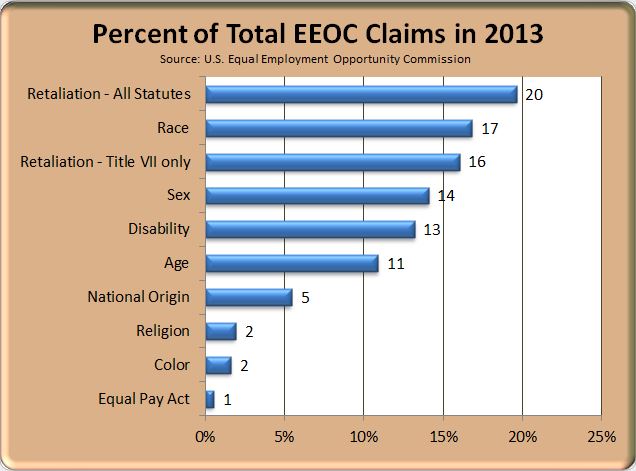
 Click for larger image.
Managing people in the workplace can be risky business. Even in the best employment environments, there are opportunities for an employee to become disgruntled. Seemingly insignificant mistakes made by a manager can lead to a charge or lawsuit resulting in financial losses for your company.
You can mitigate the risk to your business by purchasing employment practices liability insurance (EPLI).

According to the U.S. Equal Employment Opportunity Commission (EEOC) website, claims filed with the EEOC (the government agency that enforces federal employment discrimination laws) increased by 18 percent in just the past 10 years. The basis for the claims span a variety of issues, including discrimination based on race, gender, age and disability.
Your actions and motivation are subject to scrutiny throughout the entire employment process, from recruiting to termination and beyond. Decisions made in the past may be re-examined as state and federal laws change, and challenges to your decisions can be made months and sometimes years later.
Even if you have done everything right, the cost of defending against an employee claim can be prohibitive. While the damages recoverable vary, employers can be required to pay damages for back pay, front pay, other economic losses and mental anguish.
It is always advisable to consult with an attorney when developing employment applications, employee handbooks and other materials, and when making employment decisions. But even that does not prevent an employee who feels he or she was wronged from filing a grievance.
Fortunately, that’s where EPLI coverage fits in. This coverage provides a limit of insurance, separate from the standard commercial policy, which covers your business operations against many actual or alleged wrongful acts that may have been committed. The types and amounts of EPLI coverage that can apply   ̶  including co-pay percentages, limits and deductibles   ̶  can vary widely.
That’s why it’s important to assess your situation, consult with your attorney and speak to an independent agent who can tailor coverage to fit your needs. In many cases, your insurer can also provide welcome information about employer best practices and sample employee policies or other loss prevention assistance.
We specialize in employee benefits, and can guide you through your coverage needs. Give Dave a call with any questions, at 303-834-1001.
Submitted by Cincinnati Insurance 

Thursday, April 17, 2014

Tips to help your insurance agent help you

Periodically review your insurance needs
with your agent.
You count on your independent insurance agent to guide you through the purchase of personal insurance coverage tailored to meet your needs. But after the initial purchase, how often do you re-examine your policies? Your independent agent can also help you evaluate coverage periodically as your needs change.
Review at renewal
Renewals are a great opportunity to verify that you are properly insured. When you receive your renewal information from your agent or carrier – usually several weeks prior to the policy renewal date – check your coverages to make sure they’re still appropriate to your situation. If something has changed, mention it to your agent.
Consider these questions:
  • Has something about your property changed? Maybe you renovated a room, purchased luxury appliances or added a swimming pool, home theater or other room. You’ll want to make sure you’re adequately covered.
  • Did you sell the stamp collection you had listed separately on a personal items policy? Or did you purchase a violin for your child to play in the orchestra? Maybe you purchased cameras, computers, guns or jewelry…These are events that warrant an insurance review.
  • Did a son or daughter graduate from high school and head off to college? If your child is not taking a car to college and will no longer have regular access to your family vehicle, you may be able to save money on your auto premium during the time that child is away from home.
  • Do you have concerns about your personal liability? Consider adding an umbrella policy. For a reasonable premium, an umbrella policy adds worldwide liability coverage above and beyond the limits provided in your primary policies. In some cases, the umbrella may even provide coverage for things that might not be covered in your primary policies.
Consult with your agent to discuss all the changes that took place during the year, and ask your agent to evaluate if it’s necessary to update your insurance program.  
What qualifies you for a preferred policy? 
Your agent knows which insurers offer a policy that is appropriate for you. You might be a candidate for a carrier’s preferred policies if you:
  • take pride in your possessions and maintain them at a high level
  • understand the need for increased home and auto liability limits and appreciate the benefits of personal umbrella policies
  • recognize the purpose of insurance is to protect you from situations that result in significant financial distress, and are comfortable accepting a portion of the liability through a higher deductible
  • understand the importance of being properly insured at all times and have never had a lapse in coverage 

Thursday, April 10, 2014

The homeowner’s to-do list: Here’s where to start

Time to get your property in shape after winter.
Now that the seasons have turned, it’s time to assess how your property weathered the winter. This is a good time to make a “to-do” list to prevent property maintenance and liability issues.
Starting from the top:
Roof – Have a roofer check for lifting, curling or missing shingles, or shingles that have suffered granular loss. Remove any debris or built-up moss that can reduce your roof’s life expectancy. Clean gutters of any leaves or debris.
Siding and gutters – Repair any damaged or loose siding; replace any damaged gutters and fascia.
Exterior paint – Warm weather is also a great opportunity to paint siding or doors on your home or garage. A fresh coat of paint can help protect your home’s exterior from the elements.
Windows – Replace and reglaze any windows that may have been broken or lost their seal over the cold winter months. These repairs can also help keep air conditioning costs lower in warm months. Check caulking around windows, basement window wells and other areas where water may seep in.
Railings – Inspect all handrails and porch rails; make sure they’re securely fastened to prevent falls.
Sidewalks and driveways – Since outdoor activities rise with the thermometer, repair any sidewalk or driveway cracks or shifted cement to reduce the chance a guest could trip or fall.
Outdoor lighting – Replace burnt-out bulbs in your outdoor lighting so that porches, steps and walkways have adequate lighting.
Play equipment – Before turning your children loose in the yard, check play equipment for sturdiness and mend gaps in fences. Cold temperatures and precipitation can take a larger toll than expected on these items.
Other equipment – Have your air conditioning serviced before the cooling season, and clean out your clothes dryer vent to prevent a common fire hazard. Replace worn caulking around faucets, and inspect pipes to make sure everything is in working order. Check batteries in your smoke and carbon monoxide alarms and in your sump pump.
A safe home makes for a happy homeowner….and an enjoyable spring!
Submitted by Laura Lewis

Tuesday, April 1, 2014

Booming beverage industry has special insurance needs

The Colorado craft brewing industry alone grew
$126 million from 2012 to 2013
The craft beverage industry is booming. Breweries and wineries operate in all 50 states, and the number of distilleries has more than doubled since 2011.

Growth stems primarily from states welcoming breweries, brewpubs, wineries and distilleries – granting new licenses and drafting legislation to ease excise taxes – and from the desire of consumers to buy locally.

Proprietors in the craft beverage industry have special insurance needs. If you’re the proprietor of a brewery, winery or distillery, you’ll be glad to know that insurers offer products designed to protect your enterprise. Speak to your local, independent insurance agent to explore the options.

Something for every palate…

Look for property coverages that address exposures common to the industry, such as:

  • selling price and market value clauses
  • tank collapse
  • tank leakage
  • contamination and adulteration of your product
  • temperature change


Valuable liability coverages include:

  • blanket additional insured status for vendors/distributors
  • product recall expense
  • liquor liability

A round for the house!

Make sure that the insurance you purchase is adequate to cover special events you may host or attend: from tours and tastings to festivals and weddings. Talk to us about insurers that provide loss control consultations to identify potential hazards and develop and implement procedures to  ensure visitor safety.

Submitted by Kevin Getz

Pure Risk Solutions specializes in the craft beverage industry, assuring industry-specific expertise, brewer-specific policies, and customized coverage to best protect your unique brewery. We customize an insurance program to serve the needs of your business, leaving you free to focus on what really matters: making and selling great beer

As fellow brewers and proud members of the Colorado Brewers Guild, Brewers Association, and Bar Owners Association, we know what it takes to protect the business you've worked so hard for.