Showing posts with label Business insurance. Show all posts

Thursday, May 21, 2015

Brewery Tip: Safe Alcohol Service In the Taproom


With festival season upon us, we can all look forward to the upcoming festivities and increased patronage to our breweries. With this increase in fests and fun, we may also expect an increase in hiccupy, wobbly customers who have over imbibed, and inversely decrease our fun (it’s science). Read my advice below, as both a brewery owner and brewery insurance and risk management consultant, on how to handle conflict resolution with intoxicated patrons. And I hope to see you at your brewery or mine soon!
--------------------------------------------------------------------------------------------------------------------------

I’ve had the pleasure to work with 20+ breweries across Colorado and surrounding states over the past five years or so. Usually a pleasure, anyway… some of you guys smell weird. Anyway, most of my start-up clients have leaned on my experience as a brewer for advice when it comes to operations, licensing, beer quality (best part of the job), and, of course, risk management.

It’s always been fun to share what I’ve learned as an operator within the industry and a consultant to the industry. I’ve never really considered myself a very good teacher, but I’ve really come to enjoy this role.

One of the topics that has never come up in any of the conversations with the folks that brew the finest beverage on the planet has been that of conflict resolution. Specifically, resolving conflicts with intoxicated customers. The fact that this conversation has never come up didn’t occur to me until I started getting ready to interview taproom servers for our new brewery, Goldspot.

Obviously, the best way to resolve this situation is to have well-trained servers that can identify your friends that may have reached their limit. But that’s not always possible. Sometimes things are out of your control. You can have the best trained staff in the world, but if someone comes in having been over-served somewhere else, or they have a penchant for looking all cool on the outside while on the inside they’re a wobbly mess, you need to know how to take care of that person.

So, as I’ve been interviewing the awesome candidates that will hope to be presenting our liquid art to your flavor hole, the most important and telling question that I’ve asked these folks is this: How do you resolve conflicts?

I’ve compiled a short list of some of the answers that I’ve received, along with some stuff that I’ve compiled over the past few months as I build my own server training program.

    1.  If possible, don’t work alone/schedule a single staff person for late-night/closing    
         shifts. That stupid adage that your parents used to throw at you when you were 
         begging to stay out ‘til the wee small hours of the morning is pretty accurate. Not 
         everyone who’s out enjoying a drink after 10:00 PM is looking to get crunk. But when I 
         look at loss reports for my clients or prospective clients, most of the liability issues 
         involving intoxicated customers will happen after 10:00.

         Some of us are better at resolving conflict than others. Logic holds that if you’ve got  
         more than one person working, you’ve got a better chance of having someone there 
         who can successfully make the situation go away. Also, if one person is handling up 
         on an unwanted situation you still have another person to make sure that everyone 
         else is being taken care of properly.

         I also had an interviewee tell me that the bar he works at has been robbed three times 
         since he has been there. All three times is was when there was a lone worker closing 
         down the shop. Depending on where you’re located this might be a concern.

    2.  Address the person you’re concerned about directly. If they’re with a group of  
         folks that are otherwise being respectful, directly tell that individual that you won’t be 
         serving them any more alcohol that night and that you’d be happy to get them some 
         water or coffee (or Italian soda if you’re slinging suds at one of those fancy breweries).

         If they’re with a group, that group will usually take the initiative to make sure that their  
         friend stays cool and doesn’t cause any problems. From what I’ve seen, that party 
         usually settles up and leaves pretty quickly.

    3.  Be friendly when you approach them. Another old adage that came from Grandma 
         (so therefore not near as dumb as the stuff my dad told me) is that you catch more 
         flies with honey than vinegar. If you try to end a confrontation by being confrontational, 
         there’s a better chance that someone’s going to end up in a headlock than if you’re 
         nice.

         Don’t confuse being nice with being a pushover, however. You need to be confident 
         when you address them. Know that you are completely within your rights to make sure 
         that you, your clients, employees, and business are protected.

    4.  When in doubt, ask for help. If your beer is good, you’ve probably got several people 
         in your taproom. If your beer is good, some of those folks are probably regulars. If your 
         beer is good, those regulars probably love you and want you to continue serving them 
         your goodness in a glass. Those people are your allies and are usually more than 
         happy to lend a hand.

         I had an interviewee tell me that one of his favorite moves is to tell the offender that 
         he’s surrounded by people that like him (the bartender) more, and that if the offender   
         continues to be belligerent and hiccuppy, then he won’t be able to pay them any 
         attention. The guy that told me this is also 6’3” and weighs in at about 250 lbs, so he 
         can get away with talking this way. He also said that is his second to last move before 
         calling a cab and sending them on their way.

    5.  Make sure they have a safe ride home. Empower your employees to pay for cabs. 
         My employees will totally have the power to pull a $20 out of the drawer and hand to a 
         cabby to get home. One brewery owner that I spoke to has Über loaded on the    
         brewery iPad, and will arrange rides for customers that way.

         If they’ve got a sober friend who’s going to take them home, get that person’s contact 
         info and make sure that you document what happened. If anything happens after they 
         leave your establishment, you want documentation that you took the proper steps to 
         help them get home safely.


As a server of alcohol, it’s your responsibility to intervene if someone is getting out of hand. Luckily, this kind of situation is the exception and not the rule. Just remember to keep your calm, be confident, and be respectful. And, if you’re not 6’3” and 250 lbs and the situation is beyond your control, ask for help!

~Matt

Matt Hughes
Pure Risk Solutions
Office: 303-834-1001 | Mobile: 303.350.0287 
500 Briggs St., Ste. 200, P.O. Box 1274, Erie, CO 80516

About Matt
Matt is the owner of Gold Spot brewery and an insurance and risk management consultant who has been a part of Colorado's craft brewing industry for close to a decade. He uses his unique expertise in both the craft brewing industry and commercial insurance world to help breweries across the country understand the risks they face, while running his own production brewery and taproom.

Tuesday, April 7, 2015

Protecting your craft beverage equipment

Equipment breakdown coverage can protect your business
from the financial impact of an equipment loss.
While means and methods will vary, one item that all craft beverage manufacturers share is dependence on their equipment. That’s why it’s important to make sure you include equipment breakdown coverage as part of your insurance portfolio if you’re a craft brewer, distiller or winery
owner. Read more of this post

Whether a piece of metal gets into your grain and badly damages the rollers in your mill, a gear in your bottling line suddenly breaks, shutting down production, or something as simple as routine breakdown of a water heater or air conditioner occurs, Equipment Breakdown coverage protects your finances against breakdowns that are sudden and accidental.

Friday, March 6, 2015

The top 5 reasons to promptly report a claim

Report a claim promptly to your insurer 
to make sure your coverage isn't affected.
Your insurance policy is merely a promise until you have a claim, but many people hesitate to report a claim to their insurer. Here are five reasons why you should promptly report a claim if you have an incident. Read more of this post

When in doubt? Ask us for advice on whether to submit a claim, and let us help you through the process.

Tuesday, February 3, 2015

Why your privately held business needs directors and officers insurance

D&O insurance protects your company and its board.
Every corporation relies on the guidance of its board of directors for success. Although lawsuits against larger, publicly traded companies receive the lion’s share of media attention, privately held corporations are also vulnerable to lawsuits by competitors, government agencies, creditors and employees. 

You can protect your hard-earned success by purchasing directors and officers insurance (D&O) coverage for your company. Read more of this post


by Tom Kelly for The Cincinnati Insurance Companies

Thursday, November 6, 2014

Employers prepare for new OSHA reporting rule

Beginning January 1, 2015, employers will have new requirements for reporting workplace fatalities and serious injuries to the federal government. 

A new Occupational Safety and Health Administration rule also revises how records are kept and updates the list of employers partially exempt from record keeping requirements. Even an employer partially exempt from recordkeeping must still adhere to the new reporting requirements.

Read more of this post


by Steve Metzger for The Cincinnati Insurance Companies

Wednesday, October 8, 2014

Prepare your building to weather the cold

Temperature extremes from summer to winter place a heavy burden on the buildings we live in and the places we work. With little warning, gusting winds, heavy snow and bitter temperatures can create a weather event that could collapse your roof, freeze and rupture your piping and cause havoc in your life.
But prudent loss control strategies you implement before winter can protect your home or business and minimize the impact of weather-related property damage, business interruption and other losses.
Cold weather states are not the only places vulnerable to extreme winter weather losses. In reality, property owners in moderate climate states not normally associated with harsh winter weather tend to suffer the most costly losses because they are typically unprepared for extreme conditions. The winter of 2014 was one of the costliest since 1980, with $1.5 billion in insured losses filed between January 1 and February 21, 2014, alone, according to the Insurance Information Institute.
PREPARING BUILDINGS
Be prepared by keeping on top of routine building maintenance. Look for any evidence of previous damage to your building’s structure, paying special attention to damaged roof material or equipment that may need repair or replacement. Also take note of any areas that could be unstable during severe winter weather.
  • Maintain roofs in good condition. Repair leaks, secure flashing and clear debris from the roof, roof drains, downspouts and overflow outlets.
  • Check that gutters and downspouts are secured to buildings and clear of leaves and debris. Were they iced over during the previous winter? Consider installing heat trace (electric cable or tape) to prevent major icicles and ice dams.
  • Assure that all building openings are weather-tight to prevent cold air that could cause water pipes or fire protection systems to freeze. If you recently built an addition or renovated, how were existing utilities – especially water and sprinkler piping – protected from frigid temperatures?
  • Test any low-building-temperature alarms.
PREVENTING BUILDING COLLAPSE
Heavy snow, freezing rain or a series of constant rain showers and wind can cause precipitation to accumulate, leading to roof failure. Blocked roof drains and overflows can cause precipitation to accumulate and overload the roof. Many older buildings that were not required to provide secondary overflow drainage, such as scuppers, do not provide adequate drainage when primary drains are blocked.
Collapses can damage the building and its contents, destroy fire protection systems and unleash dangerous live utilities, including electricity and flammable gases. These losses can be made worse by water damage from rain intrusion or broken water piping.
Consult with a qualified contractor to assess your roof condition before you experience a problem.

Thursday, September 18, 2014

Understanding and controlling business auto costs

It’s easy to understand why prices rise for manufactured or commodity-based products. When prices for raw materials increase, the cost of the product goes up. It’s not as easy to understand the cause of higher prices in a service-based industry such as insurance. Many factors can affect the cost of insuring a business vehicle.
What can you do to hold down your auto insurance premiums?  
Read more of this post

Saturday, August 30, 2014

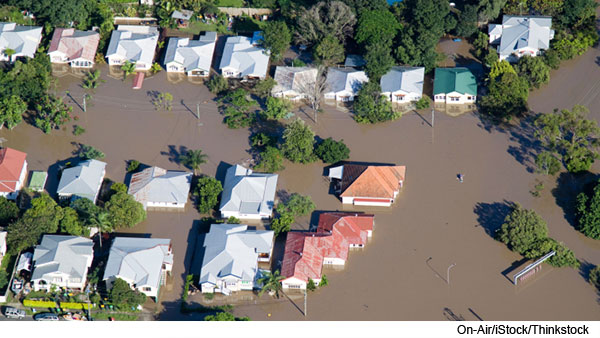
Additional coverages keep you afloat after a flood

My Insurance Doesn’t Cover What?! Understand common misconceptions that can leave you paying for a policy that may not cover you in case of water damage, and additions you can make to your policy to ensure you're covered.
-----------------------------------------------------
Ongoing patterns of severe weather mean homeowners and business owners have experienced everything from record snowfalls and tornadoes to recurring storms with wind, hail and record amounts of rainfall – all leading to a record number of flooded homes and businesses.
Water claims under personal or business insurance contracts can be confusing and easily misunderstood, and standard insurance does not cover everything.

by Michael Sullivan

Tuesday, July 29, 2014

Outdoor gatherings: Making memories, not regrets

Everyone wants to be outdoors this time of year. Block parties, family reunions and other functions are often stationed outside. As host, your concerns need to extend beyond hoping for cooperative weather and stocking snacks.

In general, any time you serve alcohol, host a pool party or provide equipment for entertainment, there is an element of potential liability on your part for any injury, and your insurance may not provide coverage.

If you own a backyard pool, you may be liable if someone is injured. Consider who uses your pool. Are children supervised? Do you limit the number of swimmers in the pool at one time? Are there slides or diving boards that could increase the risk of injury? Many insurance companies do not issue policies on properties with these types of pool equipment.

Other child-oriented activities pose hazards as well. There were several reports this year of injuries to children after bounce houses went airborne. While that is not likely to happen, other bounce house injuries are common. Children can knock into each other and cause injury. Whether you purchase or rent inflatables, follow the manufacturer’s instructions for setup and storage, and take common-sense precautions to prevent injury.

Trampolines pose an even bigger risk, and some carriers exclude trampolines from coverage or charge extra premium. The U.S. Consumer Product Safety Commission (CPSC) estimated that in 2012 there were 94,900 hospital emergency room-treated injuries associated with trampolines. The agency also noted 22 deaths in the 10-year period between 2000 and 2009.

As part of its underwriting process, your insurance company may request documentation that safety measures are in place for bounce houses and trampolines.

When you serve alcohol, be especially careful. Slower response times and reduced clarity in judgment make routine games such as lawn darts, horseshoes or football more dangerous. Also, be aware that you may be held liable if a guest drives home from a party intoxicated and injures or kills someone, or damages someone’s property, on the way. Ask your insurance agent whether your potential liability would be covered by your homeowner policy. Coverage for liability arising out of serving alcohol to guests  is referred to as host liquor liability and is not covered by all insurance companies.

Location is another concern. If you rent a shelter, be sure to ask your agent if your homeowner’s liability insurance extends property damage coverage to the rented location.

Most picnics and parties go off without a hitch. However, before you plan a big event, it is a good idea to review your homeowner’s liability coverage with your agent to make sure you are covered should an accident occur.
Coverages described here are in the most general terms and are subject to actual policy conditions and exclusions. For actual coverage wording, conditions and exclusions, refer to the policy or contact your independent agent.

By  for Cincinnati Insurance Companies

Thursday, July 10, 2014

Check coverage before loss of power, utilities

Check your policy before you have utility loss.
Many of us can still remember the effects of Hurricane Ike in September 2008, when the storm caused damage across 11 states. Widespread winds with gusts to hurricane force caused one of the largest power outages in the history of the Midwest, with close to 4 million customers losing power.

Of course, widespread power outages can occur at any time. Whether you are a homeowner with a personal insurance policy or a business owner with a commercial policy, it is important to understand what coverages you may have available before a storm hits.

Homeowners

Most homeowner policies exclude damage caused by utility service failure. An exclusion means that any damage caused by utility service failure is not covered by the policy. However, some insurance companies provide coverage for loss of refrigerated property by endorsement (a policy addition) or under the Additional Coverage section of the homeowner policy.

Coverage is usually limited and provides reimbursement for loss of freezer and refrigerator contents. Your agent can answer questions about what your policy covers.

Business owners

A loss of utilities can be costly. Even if your building is not damaged by a storm, a power outage could cause you to close your doors and prevent you from serving your customers. Business interruption insurance is available, but is not standard to every commercial policy. It  can usually be added for a reasonable cost.

In addition, business interruption insurance may not cover losses from utility service outages. Again, depending on your policy, you may be able to purchase a limited amount of coverage as a coverage extension or through an endorsement to your policy.

Whether you’re a homeowner or business owner, avoid surprises by checking with your agent in advance to assure you have the necessary insurance coverage in the event of a utility outage.

Submitted by Bill Gregory for Cinncinnati Insurance Companies

Monday, June 23, 2014

Craft Brewer Insurance Essentials: Liability Coverage


Liability risks can be some of the most 
expensive claims for your brewery.
Last month, I used a metaphor to highlight the importance of brewery-specific insurance (vs. standard commercial insurance) to your business and bottom line.

  • The “Domestics”: The 7 Essential Business Insurance Policies (that you should already have).
  • The “Crafts”: Brewer insurance essentials that protect your brewery better than the standard commercial ("Domestic") policy.
  • The 4 P’s: Four specific areas of your brewery that have unique coverage needs (“Craft”) that you most need to protect.

This month, I’ll go into detail on the first “P,” or essential area of “Craft” coverage: liability.

The two most essential ways to Protect your Passion, or at least the opportunity to pursue it (patriotic pun intended), are through brewer-specific General Liability and Liquor Liability coverage.

We protect our passion (our breweries) by protecting ourselves from Third-Party Lawsuits. General Liability and Liquor Liability are essential to your business and your bank account. If you’re up and running, you should already have these, but there are important distinctions between general and brewery-specific coverage that can make or break the future of your business in the event of an unexpected loss.

Have you ever had a patron get hurt at your brewery? Or received a demand letter from an attorney representing someone injured by one of your patrons after they left your brewery? Then you know all too well how crucial these policies really are. If you’ve been paying the premiums but haven’t yet had to cash in on them, know that they’re worth every penny. With millions of liability claims filed each year, these policies protect your business and assets from unexpected loss, which is especially important because liability risks can be some of the most expensive business claims. 


What Does It Protect? A general liability policy can protect you against costs that result from bodily injury (to patrons), property damage, medical expenses, legal costs, judgments, and personal injury claims such as libel and slander. If you rent or lease your space, commercial general liability (CGL insurance) may also provide coverage for damage to that workplace.

How Much Do You Need? The typical General Liability limit is $1,000,000 per occurrence and $2,000,000 aggregate for the year.

Tip: Umbrella policies can provide relatively inexpensive added protection, kicking in when you exhaust the limits of your business liability coverage.

Costs: Vary considerably depending on the specific risks of the brewery, but are traditionally based on annual sales volume.  As your brewery grows, it’s important to up your insurance coverage so that you have enough protection. Check in with your agent each time you consider expanding or changing your business.

What Does It Protect? This type of policy will protect the brewery from liability if someone files a claim regarding the sale of alcohol, such as someone being injured in a car accident after drinking at your tasting room. 

How Much Do You Need? A $1,000,000 limit is often recommended.  Even if an establishment is not found liable, the average cost to defend a claim is $150,000, and in Colorado the maximum limit for an award regarding the over-serving of a patron is $219,750. That’s just one claim! The nature of your business and its perceived risks will help determine your needs. Work with an agent who is experienced in craft brewery coverage when seeking business insurance quotes. You’ve put blood, sweat, and tears into building your company. You need coverage that works just as hard to protect it.

Costs: Policy costs vary widely based on your brewery’s size and location and, again, is based on annual sales volume.

Why Choose A Brewery-specific Policy? Whether you have a full service bar or offer beer tastings after tours, liquor liability is essential to cover damages to persons and property caused by patrons who claim to have been over-served at your establishment. The sale of growlers/bombers adds another brewer-specific exposure that should be addressed by your liquor liability policy. Some carriers don’t understand the craft brewing world and the environments they create. They run from businesses that they consider “bars,” because of the liability that they carry and this lack of a full understanding of the business. Be sure the carrier you are with is comfortable with everything that you are.

Finding Brewery-Specific Coverage: Confused about where to start? As an independent agent and brewpub owner, I specialize in customized insurance policies for breweries of all sizes. I can assess your liability risks and recommend the appropriate coverage, balancing both your risk management and cost saving strategies.

Contact me, John Jacquat, for a free policy assessment and make sure your brewery assets are properly insured. Or email me at john@purerisksolutions.com.