Showing posts with label Loss control. Show all posts

Tuesday, April 7, 2015

Protecting your craft beverage equipment

Equipment breakdown coverage can protect your business
from the financial impact of an equipment loss.
While means and methods will vary, one item that all craft beverage manufacturers share is dependence on their equipment. That’s why it’s important to make sure you include equipment breakdown coverage as part of your insurance portfolio if you’re a craft brewer, distiller or winery
owner. Read more of this post

Whether a piece of metal gets into your grain and badly damages the rollers in your mill, a gear in your bottling line suddenly breaks, shutting down production, or something as simple as routine breakdown of a water heater or air conditioner occurs, Equipment Breakdown coverage protects your finances against breakdowns that are sudden and accidental.

Friday, March 6, 2015

The top 5 reasons to promptly report a claim

Report a claim promptly to your insurer 
to make sure your coverage isn't affected.
Your insurance policy is merely a promise until you have a claim, but many people hesitate to report a claim to their insurer. Here are five reasons why you should promptly report a claim if you have an incident. Read more of this post

When in doubt? Ask us for advice on whether to submit a claim, and let us help you through the process.

Sunday, November 23, 2014

Make your gift count: Check out charities

Giving to a charity should not be difficult. Unfortunately, it can be. It is estimated that charity fraud exceeds $20 billion each year…yes, BILLION! 

What can you do to ensure your charitable gift is going to a legitimate charity and being used most effectively? Here are some tips:  Read more of this post


by Don Doyle, Jr. for The Cincinnati Insurance Companies

Thursday, November 6, 2014

Employers prepare for new OSHA reporting rule

Beginning January 1, 2015, employers will have new requirements for reporting workplace fatalities and serious injuries to the federal government. 

A new Occupational Safety and Health Administration rule also revises how records are kept and updates the list of employers partially exempt from record keeping requirements. Even an employer partially exempt from recordkeeping must still adhere to the new reporting requirements.

Read more of this post


by Steve Metzger for The Cincinnati Insurance Companies

Wednesday, October 8, 2014

Prepare your building to weather the cold

Temperature extremes from summer to winter place a heavy burden on the buildings we live in and the places we work. With little warning, gusting winds, heavy snow and bitter temperatures can create a weather event that could collapse your roof, freeze and rupture your piping and cause havoc in your life.
But prudent loss control strategies you implement before winter can protect your home or business and minimize the impact of weather-related property damage, business interruption and other losses.
Cold weather states are not the only places vulnerable to extreme winter weather losses. In reality, property owners in moderate climate states not normally associated with harsh winter weather tend to suffer the most costly losses because they are typically unprepared for extreme conditions. The winter of 2014 was one of the costliest since 1980, with $1.5 billion in insured losses filed between January 1 and February 21, 2014, alone, according to the Insurance Information Institute.
PREPARING BUILDINGS
Be prepared by keeping on top of routine building maintenance. Look for any evidence of previous damage to your building’s structure, paying special attention to damaged roof material or equipment that may need repair or replacement. Also take note of any areas that could be unstable during severe winter weather.
  • Maintain roofs in good condition. Repair leaks, secure flashing and clear debris from the roof, roof drains, downspouts and overflow outlets.
  • Check that gutters and downspouts are secured to buildings and clear of leaves and debris. Were they iced over during the previous winter? Consider installing heat trace (electric cable or tape) to prevent major icicles and ice dams.
  • Assure that all building openings are weather-tight to prevent cold air that could cause water pipes or fire protection systems to freeze. If you recently built an addition or renovated, how were existing utilities – especially water and sprinkler piping – protected from frigid temperatures?
  • Test any low-building-temperature alarms.
PREVENTING BUILDING COLLAPSE
Heavy snow, freezing rain or a series of constant rain showers and wind can cause precipitation to accumulate, leading to roof failure. Blocked roof drains and overflows can cause precipitation to accumulate and overload the roof. Many older buildings that were not required to provide secondary overflow drainage, such as scuppers, do not provide adequate drainage when primary drains are blocked.
Collapses can damage the building and its contents, destroy fire protection systems and unleash dangerous live utilities, including electricity and flammable gases. These losses can be made worse by water damage from rain intrusion or broken water piping.
Consult with a qualified contractor to assess your roof condition before you experience a problem.

Tuesday, September 23, 2014

Where to keep key documents…and where NOT to

Here’s a little quiz. Where is your Social Security card right now? What about your passport? Your birth certificate? Choose one:
  1. In the safe deposit box at my bank or in a locked file cabinet or fire-rated document chest at home
  2. I’m not sure, but they must be around here somewhere
  3. In my purse, wallet or briefcase

Thursday, September 18, 2014

Understanding and controlling business auto costs

It’s easy to understand why prices rise for manufactured or commodity-based products. When prices for raw materials increase, the cost of the product goes up. It’s not as easy to understand the cause of higher prices in a service-based industry such as insurance. Many factors can affect the cost of insuring a business vehicle.
What can you do to hold down your auto insurance premiums?  
Read more of this post

Tuesday, July 29, 2014

Outdoor gatherings: Making memories, not regrets

Everyone wants to be outdoors this time of year. Block parties, family reunions and other functions are often stationed outside. As host, your concerns need to extend beyond hoping for cooperative weather and stocking snacks.

In general, any time you serve alcohol, host a pool party or provide equipment for entertainment, there is an element of potential liability on your part for any injury, and your insurance may not provide coverage.

If you own a backyard pool, you may be liable if someone is injured. Consider who uses your pool. Are children supervised? Do you limit the number of swimmers in the pool at one time? Are there slides or diving boards that could increase the risk of injury? Many insurance companies do not issue policies on properties with these types of pool equipment.

Other child-oriented activities pose hazards as well. There were several reports this year of injuries to children after bounce houses went airborne. While that is not likely to happen, other bounce house injuries are common. Children can knock into each other and cause injury. Whether you purchase or rent inflatables, follow the manufacturer’s instructions for setup and storage, and take common-sense precautions to prevent injury.

Trampolines pose an even bigger risk, and some carriers exclude trampolines from coverage or charge extra premium. The U.S. Consumer Product Safety Commission (CPSC) estimated that in 2012 there were 94,900 hospital emergency room-treated injuries associated with trampolines. The agency also noted 22 deaths in the 10-year period between 2000 and 2009.

As part of its underwriting process, your insurance company may request documentation that safety measures are in place for bounce houses and trampolines.

When you serve alcohol, be especially careful. Slower response times and reduced clarity in judgment make routine games such as lawn darts, horseshoes or football more dangerous. Also, be aware that you may be held liable if a guest drives home from a party intoxicated and injures or kills someone, or damages someone’s property, on the way. Ask your insurance agent whether your potential liability would be covered by your homeowner policy. Coverage for liability arising out of serving alcohol to guests  is referred to as host liquor liability and is not covered by all insurance companies.

Location is another concern. If you rent a shelter, be sure to ask your agent if your homeowner’s liability insurance extends property damage coverage to the rented location.

Most picnics and parties go off without a hitch. However, before you plan a big event, it is a good idea to review your homeowner’s liability coverage with your agent to make sure you are covered should an accident occur.
Coverages described here are in the most general terms and are subject to actual policy conditions and exclusions. For actual coverage wording, conditions and exclusions, refer to the policy or contact your independent agent.

By  for Cincinnati Insurance Companies

Wednesday, July 2, 2014

Leave fireworks displays to the professionals

For many people, celebrating our country’s independence includes setting off fireworks on and around the Fourth of July.
While we may enjoy a spectacular fireworks display, remember that fireworks are explosives best left in the hands of professionals.
The use of fireworks by consumers is illegal in some states and strictly regulated in all, even where fireworks are labeled for consumer use. Adults planning to use fireworks to celebrate the holiday should first check the legal requirements of their state at USA.gov and take precautions to remain safe. Last year the Consumer Product Safety Commission reported that 60 percent of fireworks-related injuries happened during the 30 days surrounding the July 4 holiday. Between June 22 and July 22, 2012, more than 5,000 people were treated in hospital emergency rooms for fireworks injuries, and six were killed.
While the numbers vary from year to year, in the last 15 years between 8,500 and 9,800 people, on average, were severely injured each year using fireworks. That doesn’t include an additional 40 injuries reported in 2011 by the National Fire Protection Association (NFPA) from 17,800 fires started by fireworks, resulting in an estimated $32 million in direct property damage.
Between the injuries directly related to the handling of fireworks and those caused indirectly by the fires, more than half involve burns to the hands, head and face as well as loss of limbs. Most injuries and fires are associated with malfunctioning fireworks or improper use. Malfunctions can include unexpected detonations, unexpected flight paths and dangerous debris, while improper use can include igniting fireworks too close to someone, lighting them in one’s hand and playing with lit or used fireworks.
According to the American Pyrotechnics Association and National Council on Fireworks Safety, approximately 400 Americans annually will also lose sight in one or both eyes due to “malfunctioning” fireworks.
The U.S. Fire Administration reports that 92 percent of fireworks injuries involve items that are considered legal for consumers to use. In fact, approximately 1,000 of those injuries reported last year involved sparklers and bottle rockets – fireworks that are frequently and incorrectly considered safe for young children. Yet children between ages 10 and 14 are at three times the risk of fireworks injuries as compared with the general population.
Several organizations, including the NFPA, are opposed to the sale and use of consumer fireworks. More information and testimonials about the potential dangers of consumer fireworks is available at the NFPA website.
Fireworks laws vary widely, and warnings issued by the National Safety Council and other agencies advise that the best way to safely enjoy this Fourth of July is to watch a public fireworks display conducted by professionals.
Submitted by Wade Johnson for Cincinnati Insurance Companies

Thursday, April 10, 2014

The homeowner’s to-do list: Here’s where to start

Time to get your property in shape after winter.
Now that the seasons have turned, it’s time to assess how your property weathered the winter. This is a good time to make a “to-do” list to prevent property maintenance and liability issues.
Starting from the top:
Roof – Have a roofer check for lifting, curling or missing shingles, or shingles that have suffered granular loss. Remove any debris or built-up moss that can reduce your roof’s life expectancy. Clean gutters of any leaves or debris.
Siding and gutters – Repair any damaged or loose siding; replace any damaged gutters and fascia.
Exterior paint – Warm weather is also a great opportunity to paint siding or doors on your home or garage. A fresh coat of paint can help protect your home’s exterior from the elements.
Windows – Replace and reglaze any windows that may have been broken or lost their seal over the cold winter months. These repairs can also help keep air conditioning costs lower in warm months. Check caulking around windows, basement window wells and other areas where water may seep in.
Railings – Inspect all handrails and porch rails; make sure they’re securely fastened to prevent falls.
Sidewalks and driveways – Since outdoor activities rise with the thermometer, repair any sidewalk or driveway cracks or shifted cement to reduce the chance a guest could trip or fall.
Outdoor lighting – Replace burnt-out bulbs in your outdoor lighting so that porches, steps and walkways have adequate lighting.
Play equipment – Before turning your children loose in the yard, check play equipment for sturdiness and mend gaps in fences. Cold temperatures and precipitation can take a larger toll than expected on these items.
Other equipment – Have your air conditioning serviced before the cooling season, and clean out your clothes dryer vent to prevent a common fire hazard. Replace worn caulking around faucets, and inspect pipes to make sure everything is in working order. Check batteries in your smoke and carbon monoxide alarms and in your sump pump.
A safe home makes for a happy homeowner….and an enjoyable spring!
Submitted by Laura Lewis

Tuesday, April 1, 2014

Booming beverage industry has special insurance needs

The Colorado craft brewing industry alone grew
$126 million from 2012 to 2013
The craft beverage industry is booming. Breweries and wineries operate in all 50 states, and the number of distilleries has more than doubled since 2011.

Growth stems primarily from states welcoming breweries, brewpubs, wineries and distilleries – granting new licenses and drafting legislation to ease excise taxes – and from the desire of consumers to buy locally.

Proprietors in the craft beverage industry have special insurance needs. If you’re the proprietor of a brewery, winery or distillery, you’ll be glad to know that insurers offer products designed to protect your enterprise. Speak to your local, independent insurance agent to explore the options.

Something for every palate…

Look for property coverages that address exposures common to the industry, such as:

  • selling price and market value clauses
  • tank collapse
  • tank leakage
  • contamination and adulteration of your product
  • temperature change


Valuable liability coverages include:

  • blanket additional insured status for vendors/distributors
  • product recall expense
  • liquor liability

A round for the house!

Make sure that the insurance you purchase is adequate to cover special events you may host or attend: from tours and tastings to festivals and weddings. Talk to us about insurers that provide loss control consultations to identify potential hazards and develop and implement procedures to  ensure visitor safety.

Submitted by Kevin Getz

Pure Risk Solutions specializes in the craft beverage industry, assuring industry-specific expertise, brewer-specific policies, and customized coverage to best protect your unique brewery. We customize an insurance program to serve the needs of your business, leaving you free to focus on what really matters: making and selling great beer

As fellow brewers and proud members of the Colorado Brewers Guild, Brewers Association, and Bar Owners Association, we know what it takes to protect the business you've worked so hard for.

Sunday, March 30, 2014

Maintain privacy through records disposal


Careful document disposal curbs identity theft.
Careful document disposal curbs identity theft.
Identity theft is a major problem that is growing each year. Criminals want to use your name, date of birth, Social Security number, and other personal or account information to steal your identity. You can minimize the chances of being an identity theft victim by using safe and secure methods to dispose of important, confidential, or sensitive paper or electronic media storage devices, such as computers, CDs, and flash drives.
Set a goal to keep your information secure and avoid identity theft by taking advantage of free community shred events to dispose of your information. These events take place throughout the year, particularly during the month of April to support Earth Day and the deadline to file income taxes. Listen to your local news, read your local paper, or search the Internet to find an event in your community. You can eliminate a major source of identity theft by participating in these events.
With all the publicity about identity theft — the fastest-growing consumer crime in the country — paying a few dollars a month to add a rider to your homeowner's policy, or as a stand-alone, may be worth considering if it will buy you peace of mind. Coverage typically costs from $20 to $100 a year, and covers some of the expenses you will incur as a result of dealing with identity theft. 
The shredded paper is recycled in an environmentally friendly way into secondary paper products such as paper towels and tissue. In addition, environmentally safe electronics recycling contributes toward a zero landfill goal. You’ll feel good about helping the environment in addition to protecting your identity. When choosing an electronic device recycler, look for e-Steward and R2 certifications. The vendor should be fully committed to data erasure and recycling efforts for e-waste.
Paper or electronic storage device disposal/recycling
Whether you’re shredding paper or having data from a defective or obsolete electronic device destroyed, make sure you choose a recycler that:
  • follows the privacy laws and standards
  • understands your data security needs
  • uses the proper destruction methods for shredding or sanitization and disposal, based on your security needs
  • is an environmentally friendly recycler
Submitted by Dawn Alcorn and Debi Baker

Thursday, March 27, 2014

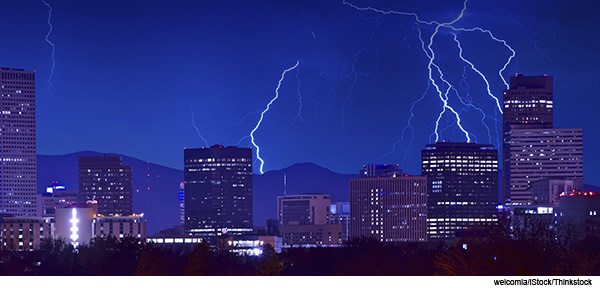
Lightning – or power surge? I’m not worried; I’m covered


denver-stormy-evening-2

Lightning and power surge can 
cause damage
In the old days – I am 54 and have been in the insurance business since 1987 – a lightning claim investigation was a pretty simple process. I would simply review whatever resources were available and determine if a thunderstorm had passed through the area on the day the loss occurred. If a storm could be verified, the loss claim was validated.
Lacking other facts to go on, it’s possible that some validated lightning loss claims could have come from other causes. Today, thanks to weather satellites and the World Wide Web, lightning strikes can be verified with pinpoint accuracy.
Why should this matter to you?
Lightning can strike at a considerable distance from your premises and – through the electrical distribution lines that serve your building – result in a power surge that damages your equipment just as a direct lightning strike would.
Because damage was not caused by a direct lightning strike to your premises, it may not be covered by your property policy. But when you purchase equipment breakdown coverage, you don’t need to worry; the damage caused by lightning, or lightning-related surge, is covered.
More information is available about the science of lightning and ways to protect your property:
See our recent post on predicted cost and claim increases in 2014, due to extreme weather patterns like lightning and hail, and how to protect your business, home, and wallet. 

Submitted by Wayne Pinney

Tuesday, March 11, 2014


‘Small’ equipment loss can be a big thing


man-buying-flowersA small business may depend on equipment such as a cooler for flowers.
When you hear machinery and equipment discussed as an available insurance coverage, you may envision huge mechanical or electrical apparatus associated with large-scale operations or massive production floors.
You may conclude that your family-run flower shop or small- to medium-sized business doesn’t need this type of coverage.
Remember that insurance is about protecting your business from loss, and loss must be considered in the context of your individual situation.
  • An unexpected mechanical failure of a small refrigeration system component at an inconvenient time – for example, the day before Mother’s Day if you run a flower shop – may result in several thousand dollars of lost stock. Repair bills could be catastrophic for your business. In financially tough times, the expense may even threaten your ability to stay in business.
  • A power surge could destroy or damage the new – but just out of warranty – phone system or computer servers upon which your accounting business depends.
By comparison, a large business may be able to absorb an equipment-related loss of several hundred thousand dollars with nothing more than a few budget adjustments.
So, who has the greatest machinery and equipment loss exposure?
When you consider that mechanical breakdown is much more likely than a major fire loss, doesn’t it make sense to consider purchasing mechanical breakdown coverage for your business – no matter the size?
The good news: it’s easy and convenient. Coverage can be added through endorsement to your existing commercial policy or, if you prefer, through purchase of a separate policy.
Call us and we can help you to determine the type and amount of coverage that’s right for your situation.

John Jacquat: (303) 843-1001
Submitted by Wayne Pinney

Sunday, March 2, 2014


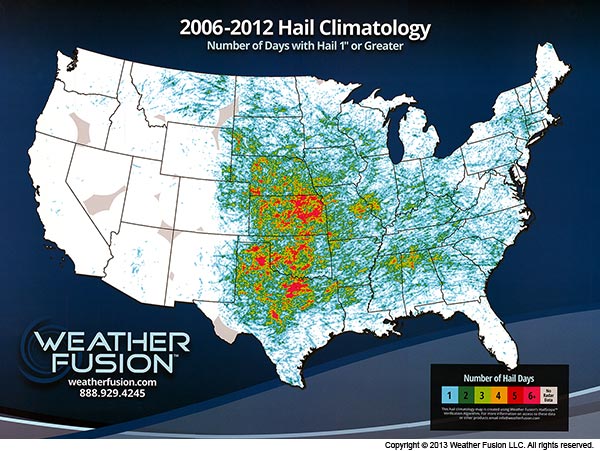
Is your business protected from hail?

Most areas of the country experience hail storms that can cause significant damage to rooftop equipment, severely disrupting your business and costing you time, money or even customers.
A major hail storm can severely damage fins on your heating, ventilation and air conditioning equipment, rendering it inoperable. That may affect your operations or cause you to cancel functions.

You can take a few steps to help keep your business running smoothly and avoid down time by protecting the equipment that keeps your customers and employees comfortable.
Hail guards serve as a protective shield for your valuable heating, ventilation and air conditioning equipment, as well as roof vents and cooling equipment, which are highly susceptible to hail damage. Large hail can severely damage a unit, but small pellets can cause harm as well. Condenser coil damage, not noticed or addressed, affects the coil’s efficiency, increases your costs and shortens the useful life expectancy of your equipment.
Hail guards come in a variety of sizes and shapes, but most meet the needs for common equipment such as fans, air conditioners, condenser units, heaters and skylights. Many contractors offer customized options for hard-to-protect items. Look online for hail guards to find more information, resources and various types of guards.
When purchasing hail guards, consider ones that are:
  • strong enough to resist hail
  • porous enough to allow sufficient and unrestricted air flow
  • close enough to the unit to obstruct hail that strikes the roof and bounces up to the unit
  • equipped with taut mesh/fabric guards that have sufficient clearance from louvers or fins to prevent hail from deflecting into the fins
In most cases, hail guards warrant the investment when you consider the widespread frequency of hail storms and the relatively low cost of the guards compared to the down time, efficiency and shortened life or replacement of your valuable HVAC equipment. Contact your HVAC contractor or equipment manufacturer for more solutions to protect your valuable equipment and keep your business in business.
Submitted by Scott Robinson and Stephen Dale

Thursday, February 27, 2014

Safeguard valuable business records and papers

loss prevention
Take steps to protect paper documents and records
Even in our electronic, computer-driven world, few businesses can operate without acquiring a number of valuable papers and physical records. Losing them to a fire or natural disaster could seriously affect business operations. Before you have a loss, take steps to protect valuable papers, or consider ways to store copies.
You know your specific business needs, but valuable papers and records may include:
  • property deeds or construction plans
  • patient, customer or employee records (remember that some may contain information protected by state and federal privacy laws, requiring additional protection measures)
  • financial documents
  • original copyrights or patents to key products
  • product specifications
  • manuscripts or blueprints
  • customer lists
  • licenses, permits, contracts
Any business could experience a loss of valuable papers and records, most commonly from an accidental cause such as a fire. Earthquake or weather events such as tornado, hurricane or flood also account for a significant number of losses. Water damage can also occur from a plumbing failure, accidental discharge from a fire suppression system or backup of sewer and drains. And documents sometimes are the target of criminals seeking proprietary data or information for identity theft.
Replacing your valuable papers and records can be expensive and time consuming. Take precautions to protect your business by storing copies of documents and records at an off-site location.
Most commercial insurance policies include limited coverage to replace valuable papers and records. Additional coverage can be added to your policy by endorsement to cover certain situations at your business or when working off-site. Your insurance agent can help you determine how much coverage you need to protect your business.
When a loss occurs, your insurance claims representative can assist you with locating vendors that specialize in remediation and restoration of valuable papers and records.  USA.gov provides assistance with replacing vehicle registrations, tax returns, county and federal documents.

Submitted by Karen Roop