Showing posts with label safety tips. Show all posts

Tuesday, December 30, 2014

The Best Worst Thing You Own

Fact: 1 In 22 Fires Is Caused By Something You Have In Your Home Right This Minute.

Laundry is a weekly chore for most of us, but did you know that clothes dryers cause around 15,500 home structure fires, 29 deaths, 400 injuries and $192 million in direct property loss each year? Most dryer fires happen in the winter, so now is the perfect time to make sure that yours is in good shape.

Causes: The #1 cause of home clothes dryer and washer fires is failure to clean. Lint is the biggest culprit. Lint traps do not catch all of the fuzzy stuff, and can gradually build up and catch fire. Lint accumulation and reduced airflow feed on each other to provide conditions ripe for a fire.      

Improper dryer vent practices restrict airflow and lead to lint buildup: the two main preventable causes of clothes dryer fires. If your dryer is installed outside of a basement, it means your dryer has longer vents with twists and turns that allow space for lint to build up. See below for tips on preventing dryer fires.

Laundry habits can also be a risk. It's easy enough to do laundry without reading drying instructions on the tag. We're all guilty of doing this. But sometimes, there are bigger consequences to drying our clothes than shrinking a favorite sweater. Items containing rubber or other materials not meant to be dried at high temperatures, and alcohol or certain sanitizing solutions that are combustible at high heat can cause a fire when exposed to dryer heat. Also, make sure that chapsticks and other plastic-containing items are removed from pockets, hoods with synthetic fur (made of plastic), etc. are removed from your laundry before you put it in the dryer.                              

Is Your Dryer At Risk?: A clothes dryer that is not working properly has an increased risk of catching fire. Signs your dryer might need service:
  • Clothes are taking longer than one cycle to dry
  • Clothes come out hotter than usual
  • There is no visible lint on the lint trap
  • Dryer repeatedly stops during a cycle
  • The top of the dryer is hot to the touch while running 

Tips To Prevent Dryer Fires (from The Cincinnati Insurance Companies)
  1. Have your clothes dryer professionally installed
  2. Clean the lint filter before and after each load of laundry
  3. Clean lint out of the vent pipe every six months
  4. Replace coiled-wire foil or plastic venting with rigid, non-ribbed metal duct
  5. Inspect the venting system behind your dryer for restrictions, and make sure the outdoor vent flap opens when the dryer is operating
  6. Keep the area around the dryer free of items that can burn
  7. Don’t overload the dryer
  8. Don’t dry items made of foam, rubber or plastic
  9. Have a professional inspect gas dryers annually to assure that supply lines and connections are intact and free of leaks


Thursday, December 18, 2014

Smart parents monitor smartphone, tablet gifts

Set ground rules for using smartphones and tablets.
Planning to get your kids a smartphone or tablet this holiday season? 

With schools using technology in classes and kids being exposed to these devices at an early age, the question is often a matter of when, not if. Parents may have questions and concerns about how to keep kids safe online. Here are some tips and resources that can help. Read more of this post

by Kerri Hinkel for The Cincinnati Insurance Companies

Sunday, November 23, 2014

Make your gift count: Check out charities

Giving to a charity should not be difficult. Unfortunately, it can be. It is estimated that charity fraud exceeds $20 billion each year…yes, BILLION! 

What can you do to ensure your charitable gift is going to a legitimate charity and being used most effectively? Here are some tips:  Read more of this post


by Don Doyle, Jr. for The Cincinnati Insurance Companies

Wednesday, October 8, 2014

Prepare your building to weather the cold

Temperature extremes from summer to winter place a heavy burden on the buildings we live in and the places we work. With little warning, gusting winds, heavy snow and bitter temperatures can create a weather event that could collapse your roof, freeze and rupture your piping and cause havoc in your life.
But prudent loss control strategies you implement before winter can protect your home or business and minimize the impact of weather-related property damage, business interruption and other losses.
Cold weather states are not the only places vulnerable to extreme winter weather losses. In reality, property owners in moderate climate states not normally associated with harsh winter weather tend to suffer the most costly losses because they are typically unprepared for extreme conditions. The winter of 2014 was one of the costliest since 1980, with $1.5 billion in insured losses filed between January 1 and February 21, 2014, alone, according to the Insurance Information Institute.
PREPARING BUILDINGS
Be prepared by keeping on top of routine building maintenance. Look for any evidence of previous damage to your building’s structure, paying special attention to damaged roof material or equipment that may need repair or replacement. Also take note of any areas that could be unstable during severe winter weather.
  • Maintain roofs in good condition. Repair leaks, secure flashing and clear debris from the roof, roof drains, downspouts and overflow outlets.
  • Check that gutters and downspouts are secured to buildings and clear of leaves and debris. Were they iced over during the previous winter? Consider installing heat trace (electric cable or tape) to prevent major icicles and ice dams.
  • Assure that all building openings are weather-tight to prevent cold air that could cause water pipes or fire protection systems to freeze. If you recently built an addition or renovated, how were existing utilities – especially water and sprinkler piping – protected from frigid temperatures?
  • Test any low-building-temperature alarms.
PREVENTING BUILDING COLLAPSE
Heavy snow, freezing rain or a series of constant rain showers and wind can cause precipitation to accumulate, leading to roof failure. Blocked roof drains and overflows can cause precipitation to accumulate and overload the roof. Many older buildings that were not required to provide secondary overflow drainage, such as scuppers, do not provide adequate drainage when primary drains are blocked.
Collapses can damage the building and its contents, destroy fire protection systems and unleash dangerous live utilities, including electricity and flammable gases. These losses can be made worse by water damage from rain intrusion or broken water piping.
Consult with a qualified contractor to assess your roof condition before you experience a problem.

Thursday, September 18, 2014

Understanding and controlling business auto costs

It’s easy to understand why prices rise for manufactured or commodity-based products. When prices for raw materials increase, the cost of the product goes up. It’s not as easy to understand the cause of higher prices in a service-based industry such as insurance. Many factors can affect the cost of insuring a business vehicle.
What can you do to hold down your auto insurance premiums?  
Read more of this post

Friday, September 5, 2014

Backyard hazards: After-school safety strategies

The start of school signals a seasonal change in routine for many families. Children may spend after-school hours at home with an adult or teen caregiver. Sometimes older children are trusted to be alone for an hour or two until a parent arrives. This change in routine offers a good opportunity to re-evaluate the safety and liability exposures right in your own backyard.

Tuesday, July 29, 2014

Outdoor gatherings: Making memories, not regrets

Everyone wants to be outdoors this time of year. Block parties, family reunions and other functions are often stationed outside. As host, your concerns need to extend beyond hoping for cooperative weather and stocking snacks.

In general, any time you serve alcohol, host a pool party or provide equipment for entertainment, there is an element of potential liability on your part for any injury, and your insurance may not provide coverage.

If you own a backyard pool, you may be liable if someone is injured. Consider who uses your pool. Are children supervised? Do you limit the number of swimmers in the pool at one time? Are there slides or diving boards that could increase the risk of injury? Many insurance companies do not issue policies on properties with these types of pool equipment.

Other child-oriented activities pose hazards as well. There were several reports this year of injuries to children after bounce houses went airborne. While that is not likely to happen, other bounce house injuries are common. Children can knock into each other and cause injury. Whether you purchase or rent inflatables, follow the manufacturer’s instructions for setup and storage, and take common-sense precautions to prevent injury.

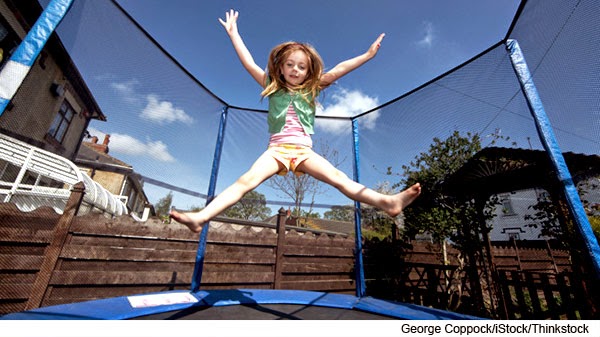
Trampolines pose an even bigger risk, and some carriers exclude trampolines from coverage or charge extra premium. The U.S. Consumer Product Safety Commission (CPSC) estimated that in 2012 there were 94,900 hospital emergency room-treated injuries associated with trampolines. The agency also noted 22 deaths in the 10-year period between 2000 and 2009.

As part of its underwriting process, your insurance company may request documentation that safety measures are in place for bounce houses and trampolines.

When you serve alcohol, be especially careful. Slower response times and reduced clarity in judgment make routine games such as lawn darts, horseshoes or football more dangerous. Also, be aware that you may be held liable if a guest drives home from a party intoxicated and injures or kills someone, or damages someone’s property, on the way. Ask your insurance agent whether your potential liability would be covered by your homeowner policy. Coverage for liability arising out of serving alcohol to guests  is referred to as host liquor liability and is not covered by all insurance companies.

Location is another concern. If you rent a shelter, be sure to ask your agent if your homeowner’s liability insurance extends property damage coverage to the rented location.

Most picnics and parties go off without a hitch. However, before you plan a big event, it is a good idea to review your homeowner’s liability coverage with your agent to make sure you are covered should an accident occur.
Coverages described here are in the most general terms and are subject to actual policy conditions and exclusions. For actual coverage wording, conditions and exclusions, refer to the policy or contact your independent agent.

By  for Cincinnati Insurance Companies

Wednesday, July 2, 2014

Leave fireworks displays to the professionals

For many people, celebrating our country’s independence includes setting off fireworks on and around the Fourth of July.
While we may enjoy a spectacular fireworks display, remember that fireworks are explosives best left in the hands of professionals.
The use of fireworks by consumers is illegal in some states and strictly regulated in all, even where fireworks are labeled for consumer use. Adults planning to use fireworks to celebrate the holiday should first check the legal requirements of their state at USA.gov and take precautions to remain safe. Last year the Consumer Product Safety Commission reported that 60 percent of fireworks-related injuries happened during the 30 days surrounding the July 4 holiday. Between June 22 and July 22, 2012, more than 5,000 people were treated in hospital emergency rooms for fireworks injuries, and six were killed.
While the numbers vary from year to year, in the last 15 years between 8,500 and 9,800 people, on average, were severely injured each year using fireworks. That doesn’t include an additional 40 injuries reported in 2011 by the National Fire Protection Association (NFPA) from 17,800 fires started by fireworks, resulting in an estimated $32 million in direct property damage.
Between the injuries directly related to the handling of fireworks and those caused indirectly by the fires, more than half involve burns to the hands, head and face as well as loss of limbs. Most injuries and fires are associated with malfunctioning fireworks or improper use. Malfunctions can include unexpected detonations, unexpected flight paths and dangerous debris, while improper use can include igniting fireworks too close to someone, lighting them in one’s hand and playing with lit or used fireworks.
According to the American Pyrotechnics Association and National Council on Fireworks Safety, approximately 400 Americans annually will also lose sight in one or both eyes due to “malfunctioning” fireworks.
The U.S. Fire Administration reports that 92 percent of fireworks injuries involve items that are considered legal for consumers to use. In fact, approximately 1,000 of those injuries reported last year involved sparklers and bottle rockets – fireworks that are frequently and incorrectly considered safe for young children. Yet children between ages 10 and 14 are at three times the risk of fireworks injuries as compared with the general population.
Several organizations, including the NFPA, are opposed to the sale and use of consumer fireworks. More information and testimonials about the potential dangers of consumer fireworks is available at the NFPA website.
Fireworks laws vary widely, and warnings issued by the National Safety Council and other agencies advise that the best way to safely enjoy this Fourth of July is to watch a public fireworks display conducted by professionals.
Submitted by Wade Johnson for Cincinnati Insurance Companies

Wednesday, May 28, 2014

Properly installed safety seat can save a life

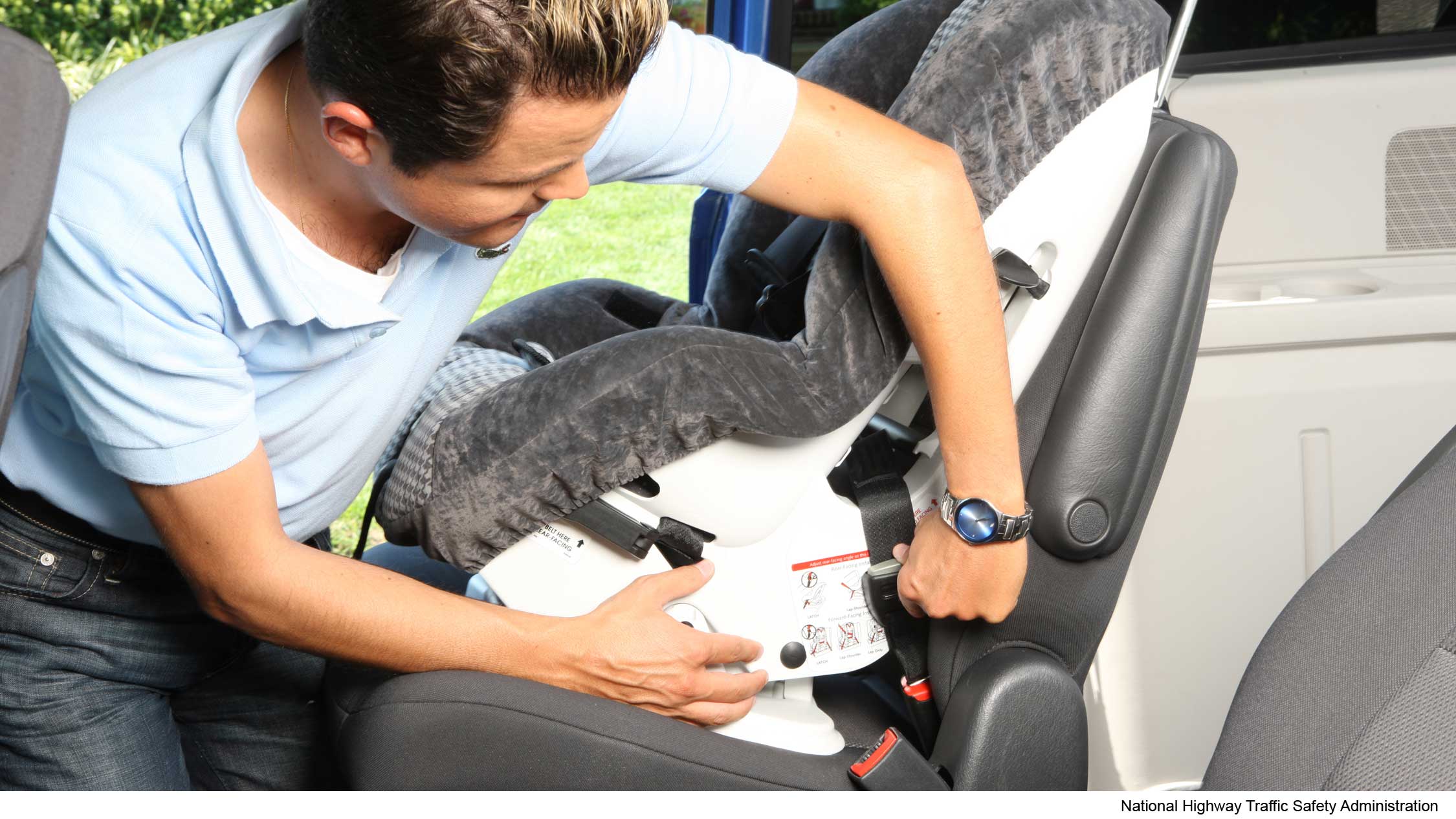
Proper installation is key to car seat protection.
One of the most important pieces of safety equipment a new parent can have is a child car seat. Just having a child car seat, however, is not enough. To truly receive the benefits the seat can provide, it must be properly installed.
Unfortunately, from 2007 to 2011 more than 3,600 children were killed in car accidents. More than a third of those were killed because they were not in a car seat or were in a car seat that wasn’t properly installed.
When my first child was born in April 2000, we bought a car seat, but we didn’t have a clue on how to install one. My local fire department was offering free installations, so I decided to check it out. I was shocked to see two firemen work to install the seat. One sat on the car seat base while the other pulled the seat belt with all his might, installed the locking clip and clicked it in. I remarked to one that it seemed like overkill. The firefighter said that, for the seat to do its job, it has to be that tight.
Five months later it was time to take a road trip to Chicago to show off our baby daughter to my family. As we approached downtown Chicago on the Dan Ryan Expressway at about 65 mph, traffic suddenly ground to a halt. We stopped in plenty of time, but a car behind us did not.
The entire event seemed to occur in slow motion. I saw the speeding car coming up fast in my rearview mirror. I yelled to my wife, in the back seat with my daughter, to hang on and, BAM, we were hit. The force of the impact knocked us into the car in front of us. My head knocked off the rearview mirror, and my knee went through the plastic trim below the instrument panel even though I was properly restrained. Before the crash, my daughter was fast asleep, but with the sudden jarring she was now screaming. We couldn’t tell if she was hurt, startled or both.
It seemed like an eternity, but it likely was only a few minutes before the fire department arrived on the scene. My wife and I were fine, but we had no idea about our daughter. The force of the impact had knocked her car seat handle up and over my driver’s seat. A firefighter cut the seat belt still holding the car seat in place, and they transported my daughter by ambulance to Chicago Children’s Hospital still in the car seat, not wanting to move her. The doctors saw her immediately and ordered x-rays to see the extent of the damage.
To everyone’s surprise, she was not harmed in any way. No broken bones, no scratches. She was completely fine. The paramedic, who remained with us this entire time, remarked that we must have had the car seat professionally installed. We told him we had the local fire department do it. He stated it was a good thing, for if there were any slack in the seat belt — even half an inch — our daughter likely would have died from the impact.
That day I became a believer in the importance of a proper car seat and the extreme importance of proper installation.  I encourage you to share my story with anyone with small children. You never know when an accident may occur, but if it does you want to be sure you did all you could to protect your child.
More information:                                                            http://www.safercar.gov/parents/index.htm                                                 http://buckleupforlife.org

Submitted by Steve Smith

Thursday, April 10, 2014

The homeowner’s to-do list: Here’s where to start

Time to get your property in shape after winter.
Now that the seasons have turned, it’s time to assess how your property weathered the winter. This is a good time to make a “to-do” list to prevent property maintenance and liability issues.
Starting from the top:
Roof – Have a roofer check for lifting, curling or missing shingles, or shingles that have suffered granular loss. Remove any debris or built-up moss that can reduce your roof’s life expectancy. Clean gutters of any leaves or debris.
Siding and gutters – Repair any damaged or loose siding; replace any damaged gutters and fascia.
Exterior paint – Warm weather is also a great opportunity to paint siding or doors on your home or garage. A fresh coat of paint can help protect your home’s exterior from the elements.
Windows – Replace and reglaze any windows that may have been broken or lost their seal over the cold winter months. These repairs can also help keep air conditioning costs lower in warm months. Check caulking around windows, basement window wells and other areas where water may seep in.
Railings – Inspect all handrails and porch rails; make sure they’re securely fastened to prevent falls.
Sidewalks and driveways – Since outdoor activities rise with the thermometer, repair any sidewalk or driveway cracks or shifted cement to reduce the chance a guest could trip or fall.
Outdoor lighting – Replace burnt-out bulbs in your outdoor lighting so that porches, steps and walkways have adequate lighting.
Play equipment – Before turning your children loose in the yard, check play equipment for sturdiness and mend gaps in fences. Cold temperatures and precipitation can take a larger toll than expected on these items.
Other equipment – Have your air conditioning serviced before the cooling season, and clean out your clothes dryer vent to prevent a common fire hazard. Replace worn caulking around faucets, and inspect pipes to make sure everything is in working order. Check batteries in your smoke and carbon monoxide alarms and in your sump pump.
A safe home makes for a happy homeowner….and an enjoyable spring!
Submitted by Laura Lewis