Showing posts with label safety. Show all posts

Thursday, November 6, 2014

Employers prepare for new OSHA reporting rule

Beginning January 1, 2015, employers will have new requirements for reporting workplace fatalities and serious injuries to the federal government. 

A new Occupational Safety and Health Administration rule also revises how records are kept and updates the list of employers partially exempt from record keeping requirements. Even an employer partially exempt from recordkeeping must still adhere to the new reporting requirements.

Read more of this post


by Steve Metzger for The Cincinnati Insurance Companies

Friday, September 5, 2014

Backyard hazards: After-school safety strategies

The start of school signals a seasonal change in routine for many families. Children may spend after-school hours at home with an adult or teen caregiver. Sometimes older children are trusted to be alone for an hour or two until a parent arrives. This change in routine offers a good opportunity to re-evaluate the safety and liability exposures right in your own backyard.

Wednesday, July 2, 2014

Leave fireworks displays to the professionals

For many people, celebrating our country’s independence includes setting off fireworks on and around the Fourth of July.
While we may enjoy a spectacular fireworks display, remember that fireworks are explosives best left in the hands of professionals.
The use of fireworks by consumers is illegal in some states and strictly regulated in all, even where fireworks are labeled for consumer use. Adults planning to use fireworks to celebrate the holiday should first check the legal requirements of their state at USA.gov and take precautions to remain safe. Last year the Consumer Product Safety Commission reported that 60 percent of fireworks-related injuries happened during the 30 days surrounding the July 4 holiday. Between June 22 and July 22, 2012, more than 5,000 people were treated in hospital emergency rooms for fireworks injuries, and six were killed.
While the numbers vary from year to year, in the last 15 years between 8,500 and 9,800 people, on average, were severely injured each year using fireworks. That doesn’t include an additional 40 injuries reported in 2011 by the National Fire Protection Association (NFPA) from 17,800 fires started by fireworks, resulting in an estimated $32 million in direct property damage.
Between the injuries directly related to the handling of fireworks and those caused indirectly by the fires, more than half involve burns to the hands, head and face as well as loss of limbs. Most injuries and fires are associated with malfunctioning fireworks or improper use. Malfunctions can include unexpected detonations, unexpected flight paths and dangerous debris, while improper use can include igniting fireworks too close to someone, lighting them in one’s hand and playing with lit or used fireworks.
According to the American Pyrotechnics Association and National Council on Fireworks Safety, approximately 400 Americans annually will also lose sight in one or both eyes due to “malfunctioning” fireworks.
The U.S. Fire Administration reports that 92 percent of fireworks injuries involve items that are considered legal for consumers to use. In fact, approximately 1,000 of those injuries reported last year involved sparklers and bottle rockets – fireworks that are frequently and incorrectly considered safe for young children. Yet children between ages 10 and 14 are at three times the risk of fireworks injuries as compared with the general population.
Several organizations, including the NFPA, are opposed to the sale and use of consumer fireworks. More information and testimonials about the potential dangers of consumer fireworks is available at the NFPA website.
Fireworks laws vary widely, and warnings issued by the National Safety Council and other agencies advise that the best way to safely enjoy this Fourth of July is to watch a public fireworks display conducted by professionals.
Submitted by Wade Johnson for Cincinnati Insurance Companies

Wednesday, May 28, 2014

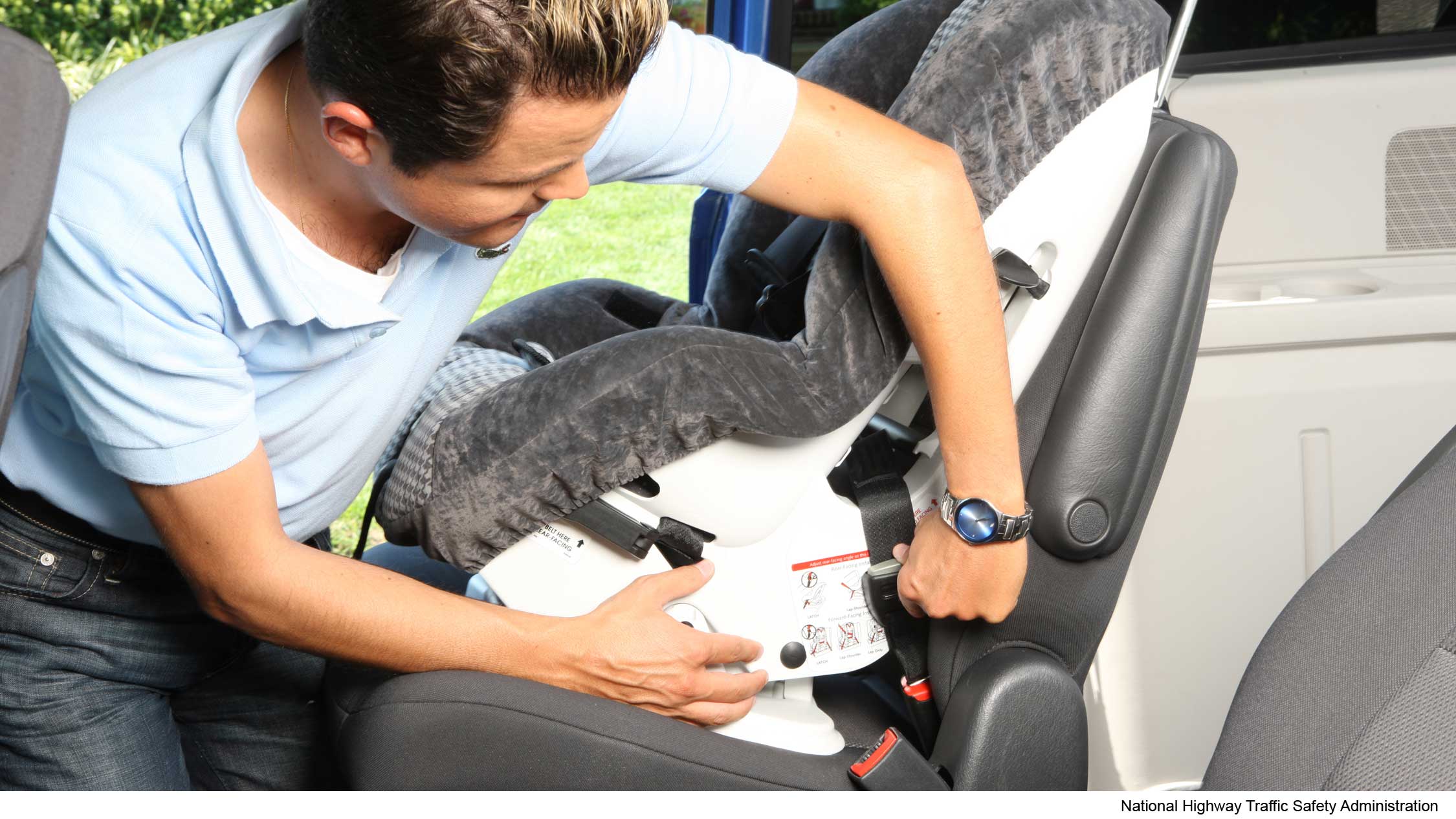
Properly installed safety seat can save a life

Proper installation is key to car seat protection.
One of the most important pieces of safety equipment a new parent can have is a child car seat. Just having a child car seat, however, is not enough. To truly receive the benefits the seat can provide, it must be properly installed.
Unfortunately, from 2007 to 2011 more than 3,600 children were killed in car accidents. More than a third of those were killed because they were not in a car seat or were in a car seat that wasn’t properly installed.
When my first child was born in April 2000, we bought a car seat, but we didn’t have a clue on how to install one. My local fire department was offering free installations, so I decided to check it out. I was shocked to see two firemen work to install the seat. One sat on the car seat base while the other pulled the seat belt with all his might, installed the locking clip and clicked it in. I remarked to one that it seemed like overkill. The firefighter said that, for the seat to do its job, it has to be that tight.
Five months later it was time to take a road trip to Chicago to show off our baby daughter to my family. As we approached downtown Chicago on the Dan Ryan Expressway at about 65 mph, traffic suddenly ground to a halt. We stopped in plenty of time, but a car behind us did not.
The entire event seemed to occur in slow motion. I saw the speeding car coming up fast in my rearview mirror. I yelled to my wife, in the back seat with my daughter, to hang on and, BAM, we were hit. The force of the impact knocked us into the car in front of us. My head knocked off the rearview mirror, and my knee went through the plastic trim below the instrument panel even though I was properly restrained. Before the crash, my daughter was fast asleep, but with the sudden jarring she was now screaming. We couldn’t tell if she was hurt, startled or both.
It seemed like an eternity, but it likely was only a few minutes before the fire department arrived on the scene. My wife and I were fine, but we had no idea about our daughter. The force of the impact had knocked her car seat handle up and over my driver’s seat. A firefighter cut the seat belt still holding the car seat in place, and they transported my daughter by ambulance to Chicago Children’s Hospital still in the car seat, not wanting to move her. The doctors saw her immediately and ordered x-rays to see the extent of the damage.
To everyone’s surprise, she was not harmed in any way. No broken bones, no scratches. She was completely fine. The paramedic, who remained with us this entire time, remarked that we must have had the car seat professionally installed. We told him we had the local fire department do it. He stated it was a good thing, for if there were any slack in the seat belt — even half an inch — our daughter likely would have died from the impact.
That day I became a believer in the importance of a proper car seat and the extreme importance of proper installation.  I encourage you to share my story with anyone with small children. You never know when an accident may occur, but if it does you want to be sure you did all you could to protect your child.
More information:                                                            http://www.safercar.gov/parents/index.htm                                                 http://buckleupforlife.org

Submitted by Steve Smith